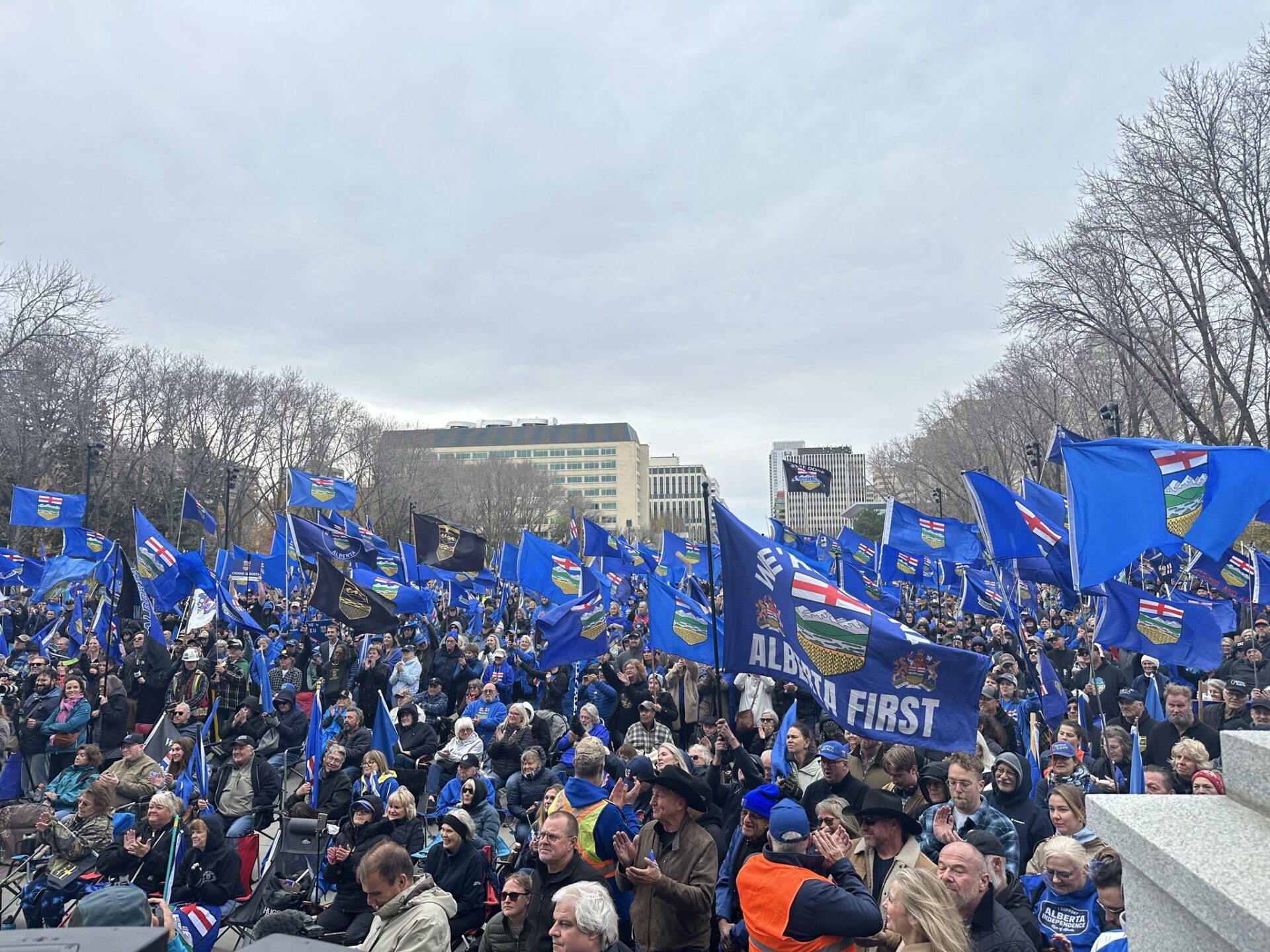
Canada’s political establishment is breathing easier now that Alberta’s independence referendum has been defeated. Seventy-five per cent voted “Remain” with just 25 per cent voting to “Hold a binding referendum.” The CEO of the Calgary Chamber of Commerce said, “It is a huge relief,” and, “certainty has been established.” While the separatist forces will likely be quieted by the result, at least temporarily, it is a mistake to believe that they have been decisively defeated.
The separatist movement in Alberta is a distorted reaction to the crisis of capitalism. In nearly all measurable ways, life is worse in Alberta than it was ten years ago. Living standards are lower than they were 12 years ago. Public services have degraded, infrastructure is collapsing, and everything is more expensive.
And yet an enormous amount of wealth is created by working people in Alberta every year. Wealth that they never get to see, let alone spend.
Many people in Alberta seem to intrinsically understand that the province creates so much value that the streets should be paved with gold, but every year they are forced to get by with less. This is reflected in polls that show Albertans have the lowest life satisfaction of any province.
Most of the arguments of the separatist movement focus on this deep economic frustration. While feelings of western alienation and propaganda blaming Ottawa for every single one of Alberta’s problems long predates the current separatist movement, it is the economic collapse which has given it a life beyond its usual place in the fringes of public opinion.
The separatist’s message resonated with a quarter of the population. Although this is nowhere near a majority, 25 per cent is also not an insignificant number, especially considering every significant force—the federal government, the provincial government, the NDP, the organized labour movement, the business councils and even the federal Conservatives—all mobilized fully against the separatists.
With the effects of the trade war and the war in the Middle East driving prices higher, living conditions will continue to deteriorate. If the left and the labour movement fail to provide a way out of the crisis of the capitalist system, vulgar explanations and right-populist campaigns like Alberta separatism will inevitably fill the void.
But as we’ve explained elsewhere, the labour leaders mistakenly united with the capitalist establishment and hated political fossils like Jason Kenney in the official “No” camp. Unsurprisingly, this unholy alliance enthused no one. This was seen at the “unity” demonstrations on Oct. 17-18: while the Alberta Federation of Labour proudly announced “tens of thousands” would rally behind the Canadian flag, the showing was less than 1,000 for each day. This pales in comparison to earlier rallies held on clear class issues such as rallies in support of the teachers last year which drew 30,000 or the AFL’s “Fightback now!” rallies a few months ago which drew out more than 8,000.
Many have expressed their desire to leave this entire divisive saga in the past. That will be difficult considering nothing has been solved.
The defeat of the referendum will not bring back the oil boom, will not bring back jobs, and will not lower prices. Neither will any of Carney’s plans revive the bonanza that was seen prior to the 2014 oil collapse. As Dianna De Sousa, CEO of the Fort McMurray Chamber of Commerce, recently said, “Nobody should expect that something that happened 15 years ago will happen the same way today.” Energy Safety Canada projects that oil sands employment will fall by four per cent by 2035, even as production grows by six per cent.
This is not to mention the other problems in Alberta: the dire state of healthcare, education, infrastructure, and the high cost of living, which are all getting worse. All of these things combine to drive working class anger.
Therefore, the underlying frustrations with the status quo will continue and must find a point of expression, if not on the left, on the right. As we detailed elsewhere, the failures of the NDP and the trade unions to mobilize the workers of Alberta in a serious struggle against the UCP and their oil baron backers is precisely what opened up the space for the separatist movement to capture class anger, distort it, and funnel it towards independence.
And this can easily happen again. Even before the results, the separatist leaders indicated that they are not giving up and would continue the fight whatever the result. Alberta Prosperity Project Leader Jeff Rath has indicated that their efforts will now shift to fight for control of the ruling United Conservative Party (UCP).
What is needed to fight this right-populist menace is a working-class movement that argues that the capitalist system is to blame, and that Albertans are mainly getting robbed by the oil barons, not by “the East”; that “equalization” draws roughly $4.2 billion out of the province, while the oil industry is set to draw $90 billion in profit this year; and that these parasites must be expropriated, and the wealth put towards social needs, guaranteeing good jobs, benefits and a decent life for all.
Without this, separatism—or whatever succeeds—it will linger on, and can easily come back with a vengeance as the crisis of the system intensifies.

