
After a long four month delay, 55,000 members of the Canadian Union of Postal Workers (CUPW) are finally voting on a contract. While a majority of the National Executive Board (NEB) is recommending a yes vote, a minority of the NEB and a number of locals are recommending a no vote—leading to much confusion in the ranks over the way forward.
How we got here
Postal workers have been under increasing attack for years. Management, working hand-in-hand with the federal government, has been determined to gut the postal service and decimate its workforce. Its agenda has included eliminating door-to-door mail delivery, cutting 30,000 jobs over ten years, and Amazonifying the remaining positions. The long term goal is obviously to privatize Canada Post.
Despite the determined agenda of its opponent, postal workers have had many things working in their favour. CUPW is a union with a long-established fighting tradition. In fact, the union itself was born out of an illegal wildcat strike which is credited for winning the right to strike for the public sector in general. This militancy allowed the union to win big gains, including paid maternity leave, which led to it being a right that every Canadian family enjoys today.
But in spite of these proud traditions, in the recent period, the union has been defeated over and over again. This is not because postal workers lack the will to fight, but because the leadership adopted a strategy that has effectively neutered the ability of the union to win.
Every time the postal workers would take to the picket lines, the government would impose back-to-work legislation, taking away the right to strike. As we explained many times, what was needed was a leadership that was prepared to defy these unjust laws, just like the postal workers did in 1965.
The refusal to do so, led directly to the situation today. In 2024 the union embarked on a four week strike and once again, were ordered back-to-work by the federal government—this time using section 107 of the labour code.
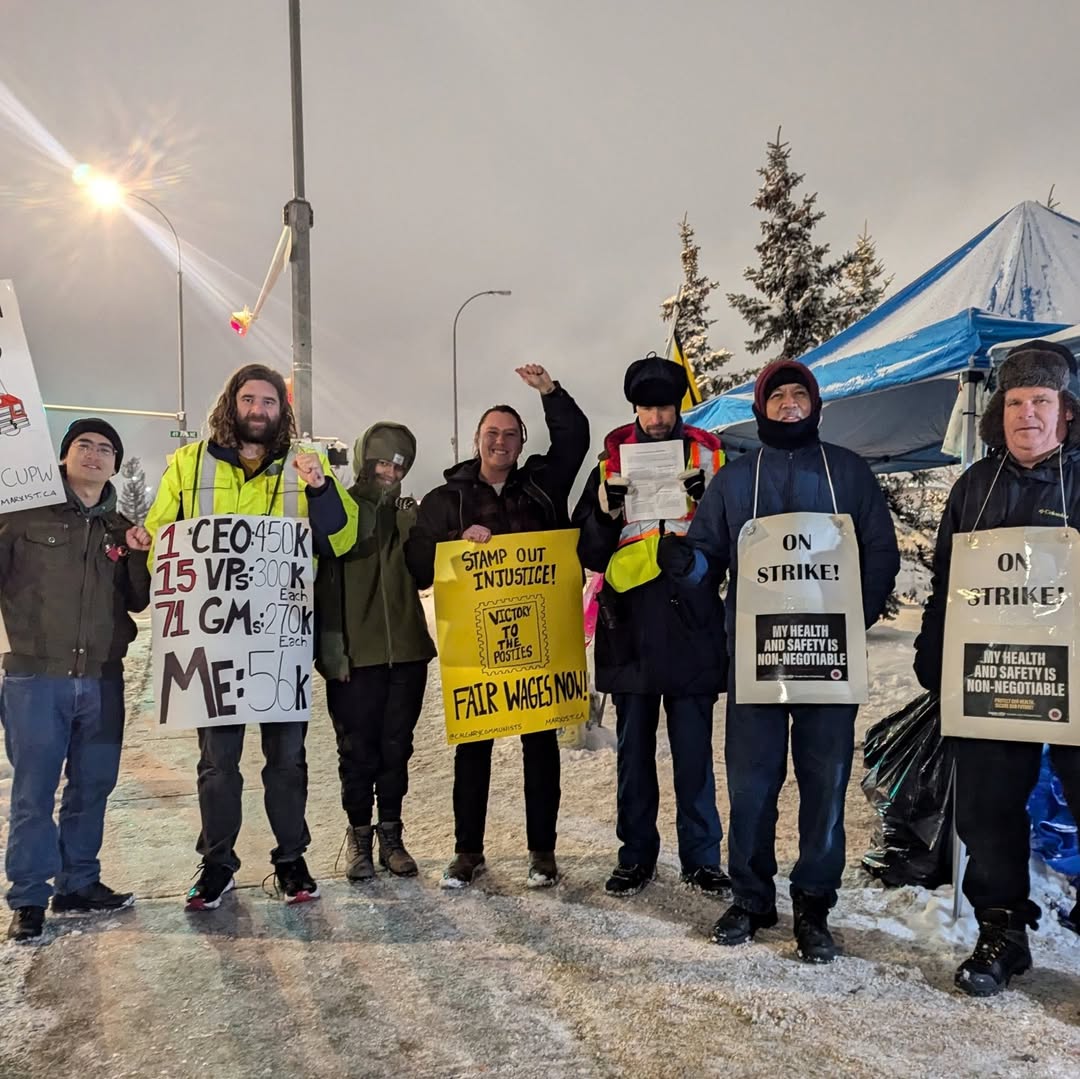
Conditions were ripe to defy this back-to-work order. In fact, Air Canada flight attendants would do just this mere months later. CUPW workers were also prepared—locals in Edmonton, Burnaby and Saskatoon had voted in advance to defy if the order were to come down.
The locals, however, were ultimately looking to the NEB to make the call. Instead, the NEB did precisely the opposite—they ordered compliance with 107 and even demanded that solidarity pickets be taken down!
This had a demoralizing effect on the ranks who want to fight but have been losing faith in their leaders to lead the fight. Weakness invites aggression and the Canada Post management, in alliance with the federal government has had the union on the ropes ever since.
Workers push forward, leaders hold back
But even then, postal workers continued to push back to try to find a way out of this impasse. They refused to accept the government-imposed contract which was voted down in the Summer of 2025. Over 69 per cent voted against this service-gutting, concession-riddled contract.
After this contract was voted down, the new Liberal government of Mark Carney decided to forego the collective bargaining route altogether. On September 25th, Minister of Government Transformation, Public Works and Procurement Joël Lightbound announced that Canada Post would be directed, despite the union’s opposition, to end door-to-door delivery, close rural postal outlets and gut over half of its unionized workforce.
In response, National president Jan Simpson made a statement in which she suggested the way to fight back is to merely make “sure the Government and Canada Post hear us loud and clear.” No plans to strike against this full frontal assault were announced. Instead, Simpson seemed more incensed that Lightbound had not given the union leadership a heads up when they met a week prior.
But rank-and-file postal workers were not going to take this lying down and decided to take matters into their own hands. In response to the cuts, the Atlantic region launched an all-out strike which started to spread to other areas. The NEB amended the previous statement made by Simpson and announced a nationwide strike, recognizing what would likely become a fait accompli.
There was huge potential for a widespread militant working class movement against austerity. Just a few weeks later the federal government announced an austerity budget, slashing 40,000 civil service jobs over five years.
The CUPW NEB, in this context, could have linked up other unions – the 200,000+ strong Public Service Alliance of Canada in particular—and demanded that the Canadian Labour Congress (to which they are affiliated) and its 3 million+ workers launch a national campaign of escalating actions to defeat these attacks. Mass demonstrations, strike actions and occupations are the only thing that can stop this assault.
Not only did the NEB fail to do this, but they de-escalated the struggle on Oct 11th from all-out to rotating strikes for no apparent reason. On November 21st they announced they had reached an ‘agreement in principle’ and called off the strike, a rather sad end to what could have been a fantastic escalation of the struggle to protect jobs and public services.
All of the above has revealed that there is a yawning chasm between the perspective of the NEB, on the one hand, and that of the majority of 55,000 rank and file workers.
The former seems to base itself on a utopian delusion that the solution to this impasse will come primarily as a result of progress at the bargaining table. They are not opposed to using limited strike action to gain greater leverage at the table, but as soon as the government moved to take the right to strike away, they actively smothered any more militant attempt to defy and continue to strike.
Why is this? Rather than doing what is necessary to win, they appear to be more concerned with maintaining the appearance of being reasonable and respectable partners with management at the table, despite the fact that management and the government are clearly trying to undermine and dismantle Canada Post and therefore the union.
Vote no
The situation CUPW finds itself in is entirely the product of the leadership of the union who have adopted a strategy that has only emboldened their opponents and sapped the desire to fight out of the ranks.
Now, the deal presented is so bad, even Simpson cannot swallow it and she has broken from the NEB. In total, 5 of 15 NEB members have dissented. Together they have published a minority report in the latest issue of CUPW’s magazine arguing against the deal.
Local leaderships in Halifax, Saskatoon, Vancouver in Edmonton have also come out calling for a no vote, as has an anonymous website outlining the case in more detail.
They correctly point out that the agreement gives Canada Post the green light to close up to 100 postal outlets, and to expand part-time work. They point out that the wage gains are insufficient, and that almost none of the original Program of Demands formulated at the outset of bargaining in 2023 have been meaningfully achieved.
This is all true, and communists wholeheartedly believe this rotten deal should be voted down. But then what?
The fact is that voting is only part of the equation. As the history of this struggle has clearly demonstrated, voting no will accomplish very little if the union has a leadership who are going to constantly undermine the struggle every step of the way.
The NEB majority argues that the contract will provide the union with the breathing space it needs to prepare to resume the fight in the future. But this is exactly the same argument that the NEB used in the last round of negotiations, which has in fact contributed to putting them in a weaker position now.
The NEB minority argues that a no vote needs to be paired with a vote to authorize further strike action. But since the NEB minority is being led by the union president who made these disastrous decisions that got us here, this does not inspire confidence in anyone. And while voting no and authorizing strike action is the right call, there doesn’t seem to be any clear plan on how to win. There is no plan to broaden the struggle out to Purolator (a company of which Canada Post is the majority owner). There have been no calls to nationalize Purolator and the other private delivery companies.
There is also no recognition of the fact that the refusal to defy back-to-work legislation and section 107 back-to-work orders is precisely what has led us into that blind alley. Nor is there a commitment to defy these laws going forward in spite of the fact that they have been successfully defied twice now. For most rank-and-file workers, the question that immediately arises is: why would I put in all of the work of striking if my leadership is going to order me back to work at the first sign of trouble?
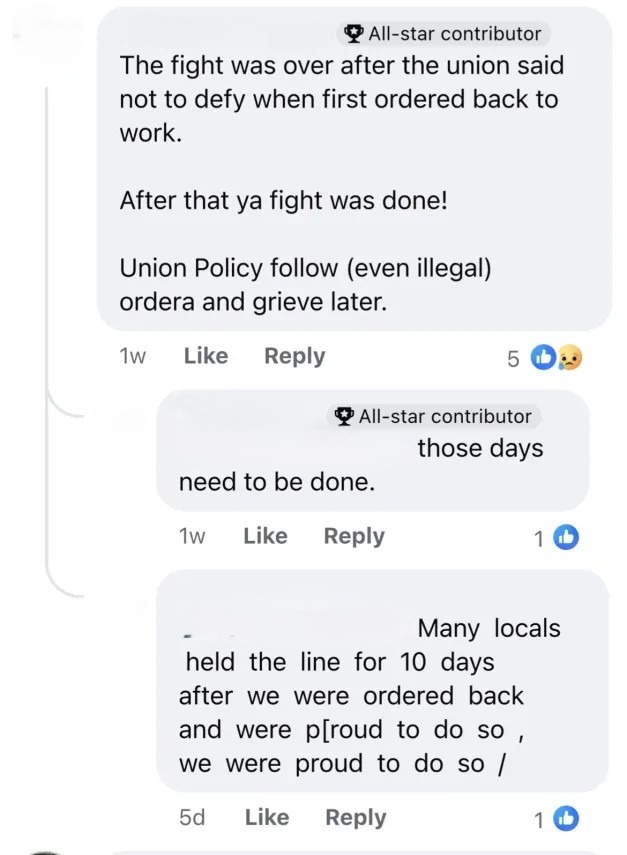
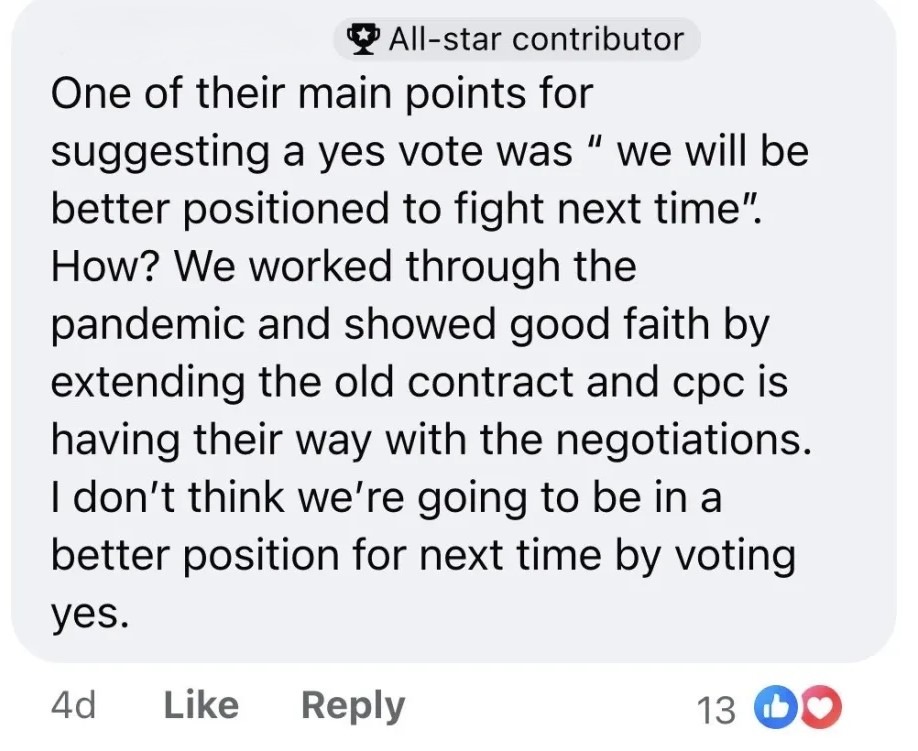
In an online group of rank-and-file CUPW members, workers have drawn a lot of these conclusions themselves:
The need for revolutionary leadership
This situation may seem impossible, but believe it or not, we have been here before. In 1965, the national leadership of our predecessors – the Canadian Postal Employees Association and the Federal Association of Letter Carriers—were dead set against the illegal strike action necessary to win. Local leaders in Montreal, Vancouver and Hamilton, however, decided to go above their heads and organize a strike anyway. And history vindicated them.
After the victorious strike, at CUPW’s founding convention later that year, the old leadership was swept out of power by the local leaders who led the strike. A new tradition through a new union was thus born.
The challenge facing us is bigger today. The main gains of the Canadian working class were won in the period of economic boom following world war two. The right to strike, maternity leave, decent wages and benefits, universal healthcare and more, were all products of this period.
But we are facing an inverse situation today – not a boom but a deep crisis. The trade war with the US has accelerated the crisis of Canadian capitalism which has lost its privileged position. Carney is determined to right the ship and re-establish competitiveness. To do this, he is doling out hundreds of billions in corporate subsidies to get oil and gas, mining and military production off the ground.
The gains of the past can no longer be afforded by the ruling class. Already, Carney is floating the privatization of airports, ports and other public infrastructure. You can bet that the privatization of Canada Post is discussed in government circles. But that is not all. Deep cuts to social services like health care and education, as well as direct attacks on the workers who provide these services are on the agenda as well.
If we want to defend ourselves, we will need a revolution in the trade union movement. Our current leaders have their heads stuck in the past and obviously have no perspectives about how we can fight back and win.
What we need is revolutionary leadership. A leadership that has faith in the rank and file and doesn’t stifle their activity and initiative. A leadership that does not accept the anti-democratic laws imposed on us to take away our right to strike. A leadership that doesn’t accept the capitalist system but fights to expropriate the big private delivery companies that they have used to beat public sector postal workers with.
This is what the CUPW Communists stand for. We call on everyone to vote down this rotten contract. But more importantly, we call on anyone who agrees with this analysis to join us and help build a revolutionary leadership from the ranks of the postal workers union to revive the militant fighting traditions of our movement.
Only this way can we defeat the attacks of the government and the capitalists but go on the offensive and toss this whole rotten system out the window once and for all.

