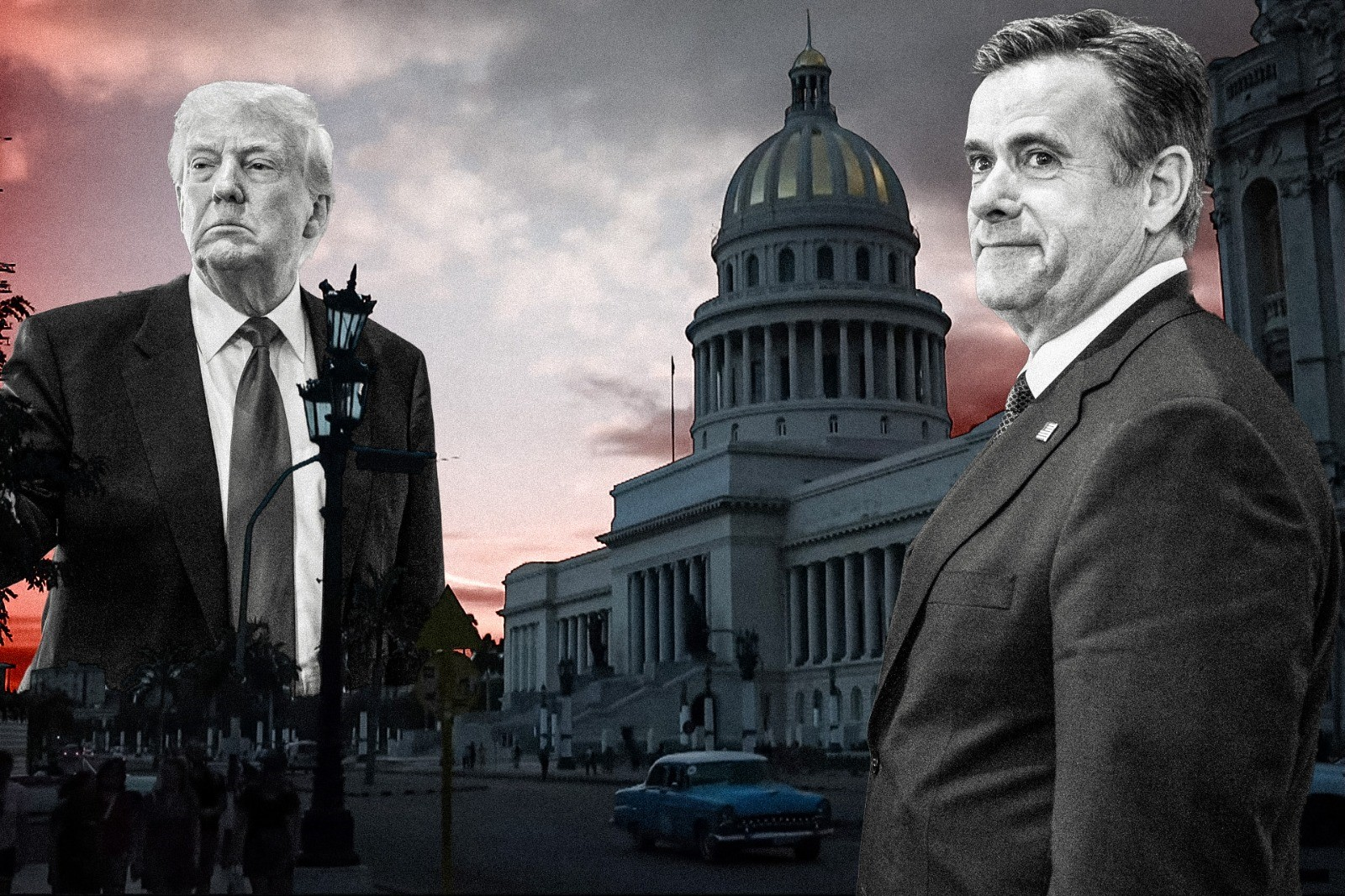
If anyone thought that US imperialism’s embarrassment in Iran would deter it from its escalating campaign of aggression against the Cuban Revolution, they were very mistaken. On several occasions, President Trump has indicated that he would “deal” with Cuba after he was finished with Iran. Since the 29 January executive order imposing an oil blockade on the island, Washington has continued to increase the pressure.
On 14 May, CIA Director John Ratcliffe travelled to Cuba to deliver a clear message: submit, or else. While there was no official US readout of the meeting (the CIA published pictures on its social media), unnamed officials briefed Axios, which has become Washington’s favourite conduit for signals and disinformation, that “Ratcliffe urged the Cuban officials to take a lesson from the Jan. 3 operation that toppled Nicolás Maduro in Venezuela” – a clear threat, straight from the Vito Corleone school of diplomacy.
Siege tactics
In case the message was not clear, the unnamed CIA official stressed that “the window of opportunity for talks with the U.S. will not stay open indefinitely and that Trump will find another way to ‘enforce his red lines’ if dialogue doesn’t work.” These are mafia-like tactics: gangsters visit you to offer protection for a fee; if you refuse to join their racket, they break your legs, trash your shop, or you end up riddled with bullets.
On 1 May, talking to a Cuban American audience, Trump declared that he likes “to finish a job”, in case anyone had forgotten his boasts about “taking over Cuba”. And he added:
“On the way back from Iran, we’ll have one of our big, maybe the USS Abraham Lincoln aircraft carrier, the biggest in the world, we’ll have that come in, stop about 100 yards offshore”.
That would force Cuba to surrender, he added:
“They’ll say ‘thank you very much. We give up.’”
As someone said earlier in Donald’s second term, what the president says should not be taken literally – a US aircraft carrier cannot physically be parked 100 yards from the shore – but he should be taken seriously.
These are not just empty boasts, as on the same day, the US issued another executive order tightening the screws of the 60-year-old blockade even further.
So draconian are the already existing provisions that, when I first read about a new order, I was a bit sceptical about what else the US could do to increase pressure.
I was mistaken. The 1 May order is long and detailed. It talks about measures affecting anyone related to the “energy, defense and related materiel, metals and mining, financial services, or security sector of the Cuban economy”. As if that was not enough, it then adds: “or any other sector of the Cuban economy”. Not only are people directly involved in these sectors to be hit, but also anyone who is “an adult family member of a person designated pursuant to this order”!! Perhaps Marco Rubio has gotten the idea of punishing family members from the Bible again, in which God punishes “the children for the sin of the parents to the third and fourth generation of those who hate me” (Exodus 20:5), only that Rubio is sparing children from punishment.
Continuing in the vein of extraterritorial US sanctions on Cuba, the 1 May order threatens foreign financial institutions providing any services to persons designated by the US – and presumably their adult relatives! – with sanctions and confiscation of property! These are not just words on a piece of paper. In the past, the US has slapped multibillion-dollar fines on European financial institutions for facilitating transactions with Cuba.
A week later, Marco Rubio issued another statement specifically designating the Cuban company GAESA and the Cuban-Canadian nickel-mining joint venture Moa Nickel SA as part of these sanctions. Immediately, Canadian mining company Sherritt, involved in the joint venture, announced the end of its operations in Cuba.
The US blockade on Cuba works not only by instructing US-based companies what they can or cannot do, but extends its remit to companies in third countries, which have to comply with US instructions if they want to continue carrying out business in or with the United States.
Venezuela 2.0?
Meanwhile, as CNN reported in a detailed investigation, Washington has massively ramped up intelligence-gathering flights by planes and drones since the beginning of the year. “The flights are notable not only for their proximity to the coast, which puts them well within range of gathering intelligence, but for the suddenness of their appearance – prior to February, such publicly visible flights were exceedingly rare in this area – and for their timing,” says the article.
Furthermore, these spy missions are being conducted publicly and openly:
“That is despite the aircraft involved being capable – should they so choose – of masking their presence by turning off their location beacons, which raises the question of whether the US is deliberately signalling the presence of these aircraft to its adversaries.”
This is exactly the same modus operandi used prior to the attack on Venezuela on 3 January, which was preceded by weeks of provocative spy flights and publicly conducted intelligence gathering.
On the one hand, these actions are a way of exercising pressure and blackmail, to show that Trump’s utterances are not just an idle threat. That is why they are conducted openly. But we should not forget that in the case of Venezuela, these intelligence gathering operations played a role when finally the US decided to attack. The US had a precise idea of the location and strength of air defence systems, which they were able to disable, etc.
It is unlikely that the US will want to carry out a full ground invasion of Cuba. That would be met with serious resistance, would be difficult to sustain in time and would lead to costly loss of personnel. The preferred option of Trump-Rubio is to achieve their aims – the submission of Cuba to US imperialist diktats – by the combined means of military threats and economic asphyxiation.
The oil blockade has been supplemented by an aggressive campaign of pressure on countries in the Caribbean and Central America (and even in Italy) to cut off Cuban medical missions, which represent an important source of income for the island.
The similarities between the current imperialist buildup against Cuba and the one against Venezuela prior to the 3 January attack are striking. On the same day as the CIA landed in Havana, CBS News reported that a prosecutor in Miami is preparing an indictment against Raúl Castro, the 94-year-old former Cuban president. In the same way that they accused Maduro and the rest of the Venezuelan leadership of imaginary crimes, they now claim the Cuban leaders are involved in “economic crimes, drugs, violent crimes and immigration-related violations”. The list reads like a confession of the methods used by US imperialism to deal with its enemies!
According to CBS News:
“Jason Reding Quiñones, the U.S. attorney for the Southern District of Florida, is working with officials from federal and local law enforcement agencies and the Treasury Department’s Office of Foreign Assets Control, or OFAC, to establish a new Cuban prosecution working group.”
However, as in the case of Venezuela, military threats become useless if the idea is created that they will not be followed by action. A campaign of targeted strikes (and we know what ‘targeted’ means for US imperialism, fresh from the massacre of over 160 school girls in Minab, Iran), decapitation attacks, the kidnapping of leading figures and attacks on infrastructure cannot at all be ruled out if Trump feels unable to achieve his aims by other means.
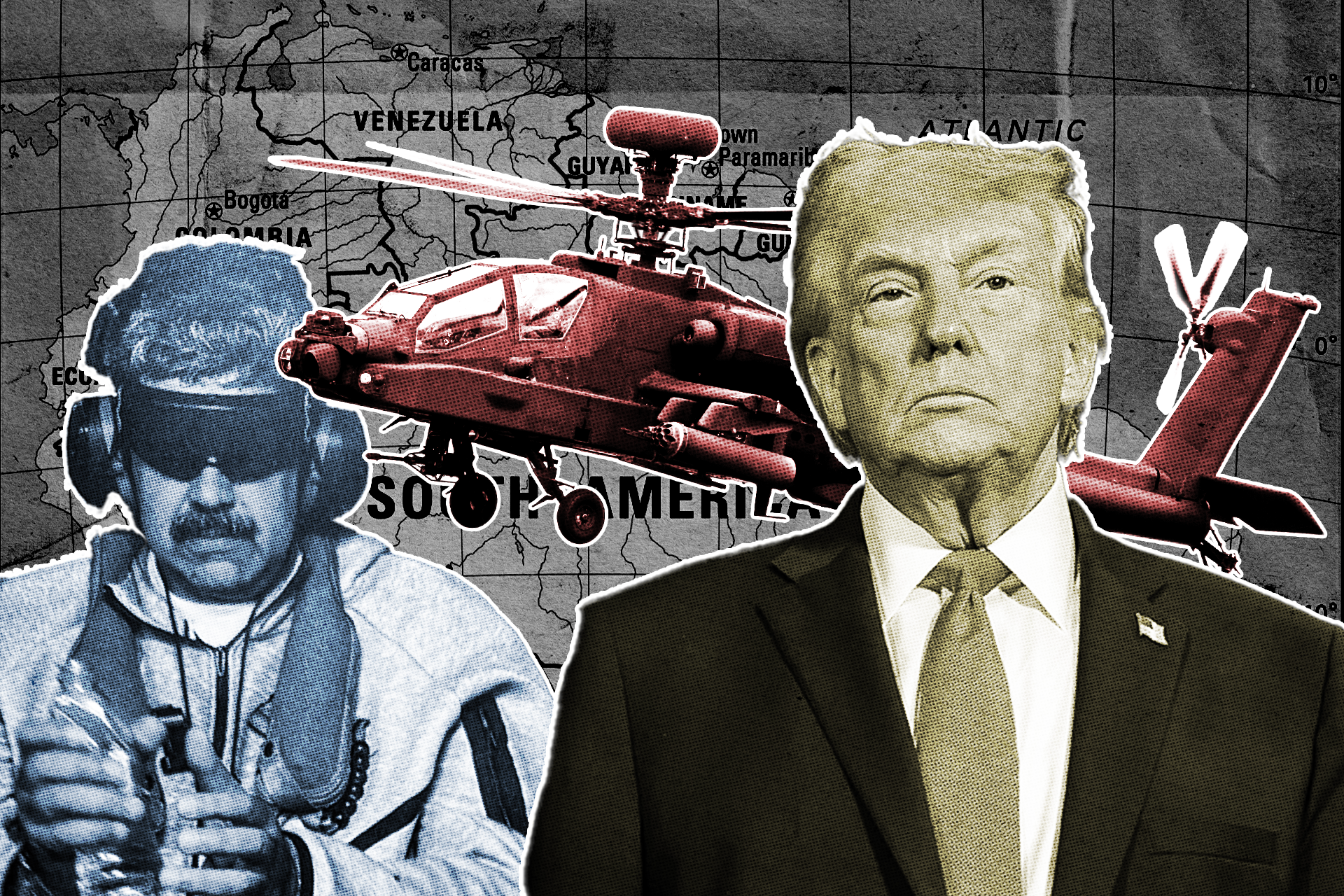
At the same time as issuing very public threats and provocative statements and economic pressure, Washington is communicating its intentions directly to the Cuban leadership. There have been meetings in Mexico, with Marco Rubio at St Kitts during the Caricom summit in February. Then, on 10 April, a US State Department delegation visited Havana for the first time since the Obama thaw. Now we have the CIA Director delivering a clear threat.
On the Cuban side, the person directly running the conversations with the US is Raúl Guillermo Rodríguez Castro, Raúl Castro’s grandson, despite the fact that he holds no official, high-ranking office in the Cuban Communist Party nor the state. US imperialism feels he is a man they can do business with.
The situation is dire. The arrival of a Russian oil tanker carrying 700,000 barrels of oil at the end of March provided a temporary respite to Cuba. That has now come to an end. On 13 May, the Cuban Minister of Mines and Energy announced that the Russian supply had been fully used up and that nothing was left. Now, electricity blackouts in the capital can last up to 20 or 22 hours.
Lack of fuel has pushed several foreign airlines to cancel flights to the island, depriving Cuba of much-needed tourism income, particularly from Canada. Moves to install solar panels have offered some relief, but their impact is limited.
In any case, the aim of the United States is two-fold: to destroy the Cuban revolution, which dared to abolish capitalism and defy US imperialism 90 miles from the coast of Florida, and also to remove the influence of US adversaries (China and Russia) from what it considers to be its own backyard.
Casus Belli
In attempting to justify the latest round of measures against the Cuban economy, Marco Rubio said, “These people in charge aren’t just economically incompetent”. The fast-talking Secretary of State has the cheek to talk about economic incompetence when the US is using all its might to sabotage the Cuban economy! It’s like tying a man’s legs together, blindfolding him, beating him in the head and then loudly declaring, ‘He’s absolutely useless at the 100m sprint!’
But the most important accusation Rubio made was to back up the spurious claim that Cuba is a threat to the US national security:
“They have rolled out the welcome mat to adversaries of the United States to operate within Cuban territory against our national interests with impunity. We are not going to have a foreign military or intelligence or security apparatus operating with impunity 90 miles off the shores of the United States.”
These allegations are to be taken in the same spirit as when Colin Powell told us Iraq possessed weapons of mass destruction (it didn’t) and when Trump insisted that Venezuelan president Nicolás Maduro was the head of the non-existent Cartel de los Soles (the US later dropped the allegation from the official indictment).
These are just made-up accusations used to provide a semblance of a justification for imperialist aggression. One day it is Russian bases in Cuba, the next day it is Chinese bases. If you want to look for foreign military bases in Cuba, you can start with Guantanamo Bay, where the US keeps a military facility it uses to illegally detain foreign nationals illegally kidnapped from their countries!
Marco Rubio does not flinch in lying. He even went as far as denying the US was imposing an oil blockade on Cuba, when this is exactly what the 29 January executive order does.
One thing is certain: the United States arrogates to itself the right to decide which countries are allowed to invest in the whole of the American continent, which it considers its backyard. This is clearly spelt out in the so-called ‘Trump Corollary’ in the recent US National Security Strategy document:
“We will deny non-Hemispheric competitors the ability to position forces or other threatening capabilities, or to own or control strategically vital assets, in our Hemisphere.”
Certainly, this was a crucial aim of the attack on Venezuela on 3 January. In the words of Marco Rubio: “We don’t need Venezuela’s oil. We have plenty of oil in the United States. What we’re not going to allow is for the oil industry in Venezuela to be controlled by adversaries of the United States,” naming China, Russia and Iran.
Cuba does possess some rare earth and critical mineral deposits (including nickel and cobalt), which would be an added bonus were the US to take control. However, the most important question is that it is a country next to the United States which has close trade and political relations with China and Russia. From the point of view of US imperialism, this cannot be allowed.
Imperialist blackmail has already forced Cuba to make concessions. New foreign investment regulations give more rights to Cuban Americans to directly invest in the island. While preventing the Cuban government from importing oil, the US allows private companies in Cuba to import fuel, provided it is not then sold on to state actors (hospitals, electricity plants, etc). Now the Cuban government, starved of supplies, has been forced to allow private companies to resell fuel to individuals.
All of these measures go in the same direction: the dissolution of the already battered state-owned planned economy established by the Cuban revolution in 1959-62 through the expropriation of capitalism and imperialist property.
Cynically, Marco Rubio has ‘offered’ Cuba $100 million in humanitarian aid, as long as it is not distributed through the government. This is like being stabbed in the stomach by a knife-wielding thug, who then proceeds to give you a bit of gauze to stem the blood flow.
The United States is engineering a massive economic crisis. In 2025, the Cuban economy contracted between 1.5 and 4 percent according to different estimates. Since 2019, it has collapsed by over 20 percent. In 2026, it could fall a further 6.5-14 percent. The United States is imposing a medieval siege in order to starve the Cuban revolution into submission.
The fact that US imperialism is being humiliated in Iran does not make it less perilous for the Cuban revolution. In fact, the opposite could be true. Washington could calculate that Cuba would be an easier to achieve foreign policy victory, one which is certainly very important for Marco Rubio and for the powerful Cuban American mafia in Miami. If it could be achieved, it would help Trump in the midterms and would be an important step forward in the ‘Donroe Doctrine’ of US domination of the whole continent. Nicaragua would probably be the next target.
Capitalist restoration?
In these conditions, would a section of the Cuban leadership consider making a deal with the United States, under duress? For fifteen years now, Cuba has embarked on a process of pro-market reforms. This has accelerated in the last seven years under the pressure of US bullying and economic blockade.
Small and medium private companies are flourishing in Cuba. While key sectors of the economy remain in state hands, the private sector employs about 40 percent of workers, represents 55 percent of all retail sales and imports goods worth $1 billion. The existence of small and medium-sized private companies would not necessarily be a problem in itself in a planned economy. But we are talking here about a very weak state planned economy, subject to 60 years of brutal criminal blockade. Behind Cuba’s private sector stands the powerful force of the world market and the Cuban American capitalist class in Miami. These are extremely powerful forces which act as a dissolvent of the planned economy – which is the foundation upon which all the gains of the revolution rest.
With the weakening of the planned economy, which has accelerated since the 2018 monetary reform, we have seen the rapid growth of inequality, poverty and destitution, phenomena which the Cuban revolution had eradicated or significantly reduced. The rationing card, which distributed subsidised food items, is progressively being abolished. Elderly care has been opened to the private sector. There are beggars on the streets, some of them children. The wonders of the capitalist free market are increasingly present in Cuba.
Relatives and friends of high-ranking officials are already involved in private businesses, and the people ask themselves ‘Where did they get the money?’ As happened in the Soviet Union, some of the state bureaucrats and company directors will want to become private owners of the enterprises they run, as opposed to simply having managerial positions.
We must warn that the very existence of the bureaucracy, the fact that ordinary working people in Cuba are not directly and decisively involved in the running of the economy and politics, is a factor which has been undermining the revolution. For many, the leadership has lost all authority, and is seen as unable to offer any way forward and as having no clear strategy.
Defend the Cuban Revolution!
There are still large reserves of support for the Cuban revolution, particularly when faced with the threat of foreign military aggression, as seen in the massive mobilisation on May Day.
Recently, a series of counterrevolutionary publications, funded by US imperialism, conducted a so-called ‘survey’ of the Cuban people. The whole premise was flawed, as there was no way of controlling who participated (even I did, four times), no way of having a representative sample, not to mention the fact that all questions were clearly biased.
The result was predictable: 80 percent in favour of “liberal capitalist democracy” and over 60 percent in favour of US military intervention in order to achieve it. But even in this poll – of a clearly counterrevolutionary sample of the population – there was an interesting detail. When asked which things should be kept and which ditched in a “transition”, even amongst these reactionaries, over 70 percent said they wanted to retain free healthcare and education and 68 percent wanted to retain “sovereignty and independence”. Quite how anyone can maintain sovereignty while demanding a foreign military intervention is anyone’s guess, but these results reveal, in a small symptomatic way, the impact of the revolution’s gains on the consciousness of the Cuban people.
Of course, the completion of capitalist restoration in Cuba would mean, necessarily, the complete destruction of the revolution’s gains, including free healthcare and education. Above all, it would mean an end to sovereignty and independence. Cuba would become a country like Haiti or Puerto Rico. It would return to being what it once was, before the 1959 Revolution: an Epstein island, a playground for the mafia, complete with brothels and casinos, dominated by US multinationals, with the majority of the population living in poverty, facing unemployment, overcrowding and misery.
It is therefore urgent and necessary to defend the Cuban Revolution. Its fate will ultimately be decided in the arena of international class struggle. Workers and youth in Brazil, Colombia and above all Mexico have a duty to raise a powerful campaign against US imperialism to force their own governments to break their complicity – through inaction – with the US’s oil blockade. Workers and youth in the United States have a duty to mobilise against their own imperialist government and defeat its policies in the same way they did in Minneapolis with ICE.
The Cuban revolution can only be defended by revolutionary means, in Cuba and above all, internationally. The Revolutionary Communist International around the world stands on the frontline of the campaign to defend the Cuban Revolution, which ultimately cannot survive if it remains isolated.

