Throughout history, human societies have established moral codes to live by, which have also provided a powerful ideological force for the maintenance of the existing order. Today, the hypocrisy of the capitalist moral order is being increasingly exposed and challenged by the masses. In this article, Hélène Bissonnette explains how morality develops, its hypocritical nature under class society, and the crisis of bourgeois morality today.
[This article was originally published as part of issue 50 of In Defence of Marxism magazine – the quarterly theoretical magazine of the Revolutionary Communist International. Subscribe and get your copy here]
“Frankly, these parasites simply had it coming.”
These words were written by Luigi Mangione, the alleged killer of the CEO of the insurance company UnitedHealthcare. In response, the American political establishment issued the best joke of 2024: “violence can never be used to address political differences”.[1]
In the hypocritical, Orwellian language of the great and powerful, this means we must understand that the wars waged by American imperialism in every corner of the planet are not political violence. And neither is the genocide in Gaza, which is fully supported by the American government.
Unfortunately for our moralising leaders, the working class is not as easily fooled as they might think.
At one time, the murder of a CEO might have attracted popular sympathy for the victim. But today, a striking level of sympathy has been expressed for the alleged murderer. A poll taken in December 2024 found that 41 percent of Americans aged 18 to 29 consider this murder “acceptable”.[2]
Rather than questioning the morality of murdering someone in cold blood, the real question many workers asked was whether it is morally acceptable to make millions of dollars from the deaths of thousands of people whose insurance claims had been rejected? The answer was a resounding: ‘No!’
Things are changing. The reality of life under capitalism is changing. Consciousness is changing. And with that, morality is changing too.
What is morality?
Morality can be defined as the set of rules or precepts of human action, and of social life. At school and in church we are taught that morality is timeless and absolute, i.e. the same for every individual, in all places, and at all times.
The Marxist understanding of morality, however, rejects this abstract approach. Rather, it sees morality as something concrete, at root a material question, which is dictated by the evolution of human societies throughout history.
Our ideas about the world are not static, but undergo a constant process of development. Morality likewise changes, evolves, as our conditions and social relations change.
All over the world today, the killing of babies is a shocking and morally repugnant crime. But there is considerable evidence that infanticide was an acceptable practice in many hunter-gatherer societies around the world. Likewise, owning slaves was once considered morally acceptable and even respectable; today it is forbidden in most countries, although it still exists in various forms.
These are not simply differences of opinion between different cultures, which just so happened to decide randomly they wanted to live a certain way. These vastly different moral outlooks reflect changes in the development of society and above all in the development of humanity’s productive forces.
Having a large number of dependent children was known to reduce the productivity of mobile hunter-gatherer societies, whilst increasing the number of mouths to feed. In certain conditions this could pose an existential risk to the community as a whole. The practice of infanticide thus reflected the harshness of life at a time when the level of development of the productive forces was extremely low.
The rise and fall of slavery also reflected changes in the economic foundation of society. Most slaves were either captured in war or were destitute individuals, no longer able to support themselves. While falling into slavery was considered a serious misfortune, it was nonetheless preferable to the only other alternative in most cases, which was death. At the same time, slavery played an essential role in the production of a large surplus, upon which the achievements of a number of ancient civilisations were based.
Therefore, to the ancient Hebrews or Greeks, someone who had many slaves was far from being a criminal or even an exploiter. He (and it was usually a he) was perceived as a prominent member of society, who had been blessed with a large household thanks to his courage, acumen, or the favour of the gods.
It is only after slavery became redundant, and indeed an obstacle to further economic development, that masses of people began to object to slavery in general. It is no coincidence that abolitionism became a mass movement at the same time that the working class, that is free wage labourers, was growing rapidly due to the industrial revolution. This illustrates what Trotsky explained: “morality is the product of social development”.[3]
Ruling ideas
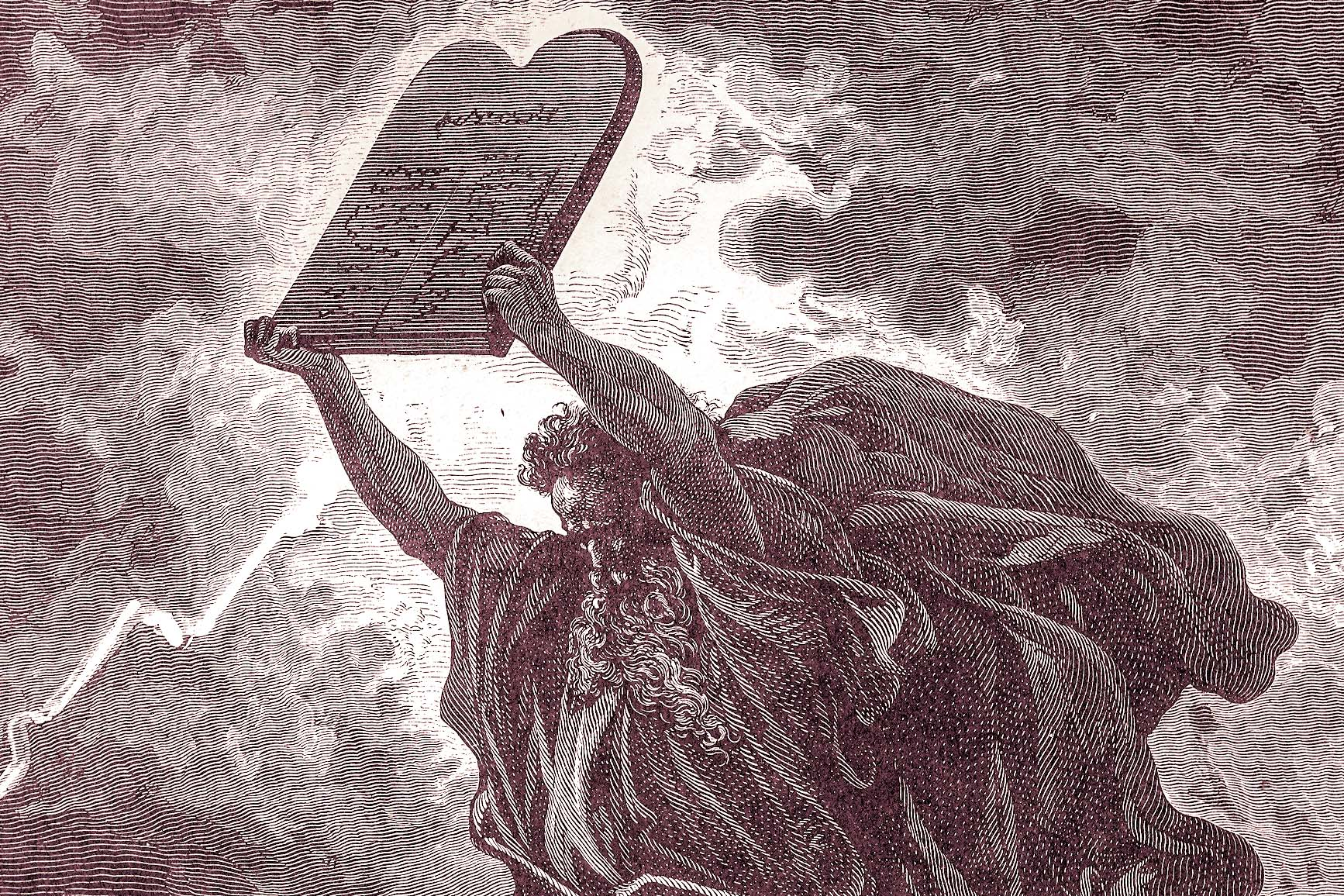
One of the most common moral rules, which seems timeless and inherently right to many, is that one should not steal. In the Bible, this is presented as having literally come down from Heaven, from an eternal authority above society, in the Ten Commandments.
But this rule is also a product of social development. For most of human existence, there was no private property and inequality, without which the very concept of ‘theft’ becomes meaningless.
It was the development of agriculture, dating from roughly 12,000 years ago, and the growing ability to produce a surplus, that provided the material basis for the emergence of inequality, private property and, eventually, the division of society into antagonistic classes.
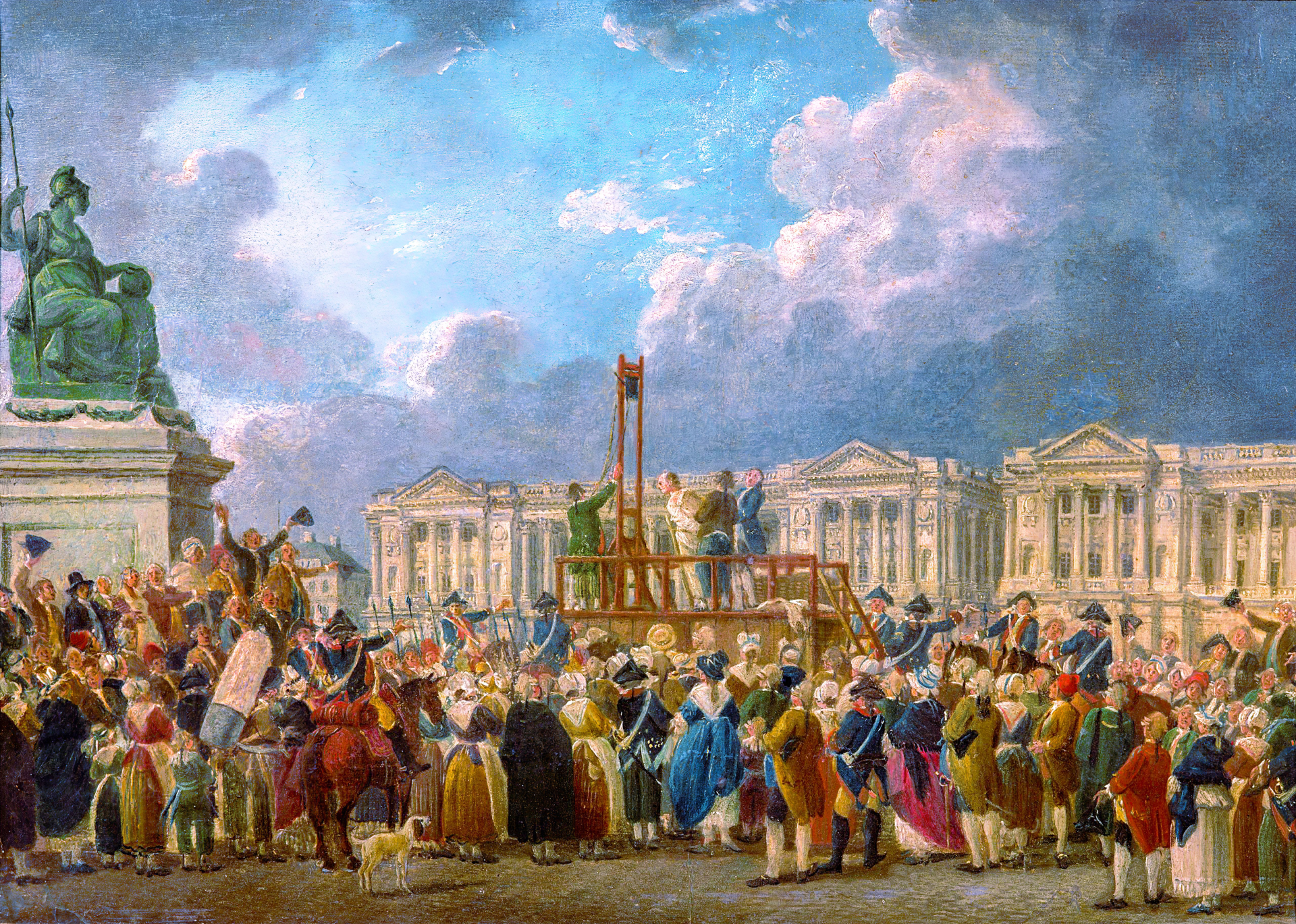
The new social relations resting on the exploitation of the majority, naturally found their reflection in a new morality of the privileged class, which also monopolised the ideological institutions of the time, such as writing, organised religion, etc. When the armed bodies of the state came into being, they were at once the protectors of the property of the rich and the guardians of public order and morals. This has continued to this day.
Class society itself constantly gives rise to ‘immoral’ behaviour, such as theft, and at the same time the need to explicitly prohibit it. The prohibition, however, can never actually abolish immoral behaviour, because it is a product of objective contradictions, such as inequality. Thousands of years of the teaching of this commandment have not stopped countless acts of theft.
In The German Ideology, Marx and Engels explained:
“The ideas of the ruling class are in every epoch the ruling ideas”.[4]
The ruling class could not maintain its power over the vast majority if it only had naked force to rely upon. It needs other means, which are principally ideological, and of which morality forms a key component. Morality therefore functions as a tool in the hands of the ruling class.
Moral decay
For as long as society has been split into exploiting and exploited classes, morality has gone hand in hand with hypocrisy. Official morality always purports to establish rules of conduct for all of society, on everyone’s behalf. But in reality it justifies and maintains the existing social relations, and condemns behaviour that undermines them.
Fundamentally, the morality of the ruling class plays an important part in the social order, by attempting to unite the antagonistic classes. It maintains the illusion that social harmony can be maintained with abstract, universal principles of life. But this is completely false. The morality of the exploiters thus serves to blur and mask the class struggle, in the service of the ruling class.
Thus, when the feudal aristocracy was the ruling class of society, honour and loyalty were important, supposedly ‘universal’ values, propagated to maintain a hierarchical and stable feudal system. Instead of ‘all men are born equal’, the rulers demanded that everyone knew their place in the rigid social hierarchy, which was supposedly ordained by none other than God himself.
Further, the ruling class never really respects its own moral code, and will abandon it without fail if its vital interests are threatened. The same Catholic Church that preached humble submission and gentleness to the majority would think nothing of ordering the massacre of entire towns if they succumbed to ‘heresy’.
But if the morality of the ruling class has always been hypocritical, then this raises the question, why is it accepted by the masses at all? If it were simply a question of propaganda or force, it is unlikely that a moral system could take hold within the hearts and minds of the oppressed for centuries. Again, this question relates to social development and to the class struggle.
When a ruling class is moving society forward, when its social order is stable and developing the productive forces, its rule ‘makes sense’ to all classes, even the oppressed. Likewise, its moral order makes sense, and is seen as a necessary guard against the collapse of all morality and the descent into bestial appetites.
Hence the feudal morality of the Catholic Church was accepted as right by everyone, albeit in different ways by different classes. When breaches of that morality by the ruling class were discovered, they were put down as individual crimes. Dante’s Hell is full of kings and popes who transgressed medieval Christian morality; his Heaven is full of individuals, both noble and common, who were thought to have epitomised it. In short, hypocrisy was seen as an error to be cleansed from the moral order, not an intrinsic feature of that order.
However, when the mode of production at the base of society has outlived its usefulness, and the social system based on this mode of production enters into a period of historic crisis, the ruling class is no longer able to maintain its rule in the same way. Its social order no longer makes so much sense, and neither does its moral order. Ted Grant explains:
“Amorality is not something new in history. It takes shape usually in a period of breakdown of the old social system, and the transition to a new social system. With the loss of function of the old ruling class, the moral codes pertaining to its rule also break down. And similarly in a period of transition, the new morality based on new relations of production also takes time to emerge.”[5]
The period of the decline and collapse of Roman slavery is full of examples of moral disintegration, particularly amongst the ruling class. Under emperors like Commodus and Caracalla, assassinations, mass murder, and all manner of depravity became a common part of public life. It was in this context that millions of people in the Roman Empire, seeking a new set of values, turned to Christianity by the end of the third century.
Despite its origins as an obscure Jewish sect in a far-off corner of the empire, Christianity spread rapidly amongst Roman gentiles (non-Jews). In part, this was because of the fiery rhetoric to be found in the gospels against the hypocrisy and immorality of the elite, such as:
“Woe to you, scribes and Pharisees, hypocrites! For you are like whitewashed tombs, which outwardly appear beautiful, but within are full of dead people’s bones and all uncleanness.” (Matthew 23:27)
Likewise, the period of the Renaissance in Europe, during the fifteenth and sixteenth centuries, was one in which the old feudal order was irretrievably broken, the rule of the aristocracy produced nothing but crisis, and all of its moral institutions were widely seen as corrupt. The intensity of the struggle between the classes, and between the contenders for power amongst the new bourgeoisie, was reflected in the morality (or amorality) of the time. As Trotsky noted:
“Corruption was the keynote in Italian politics. The art of governing was practised in cliques and consisted in the gentle arts of lying, betrayal and crime.”[6]
Trotsky points out that Machiavelli, who lived during this period of transition, saw the struggle for political power as a “chess theorem”, in which questions of morality did not exist. Machiavelli is often characterised as an amoral intriguer himself. In fact, he was basing his theory on the actions of the ruling class of the time, including the papacy. By exposing them so openly to the public, it is no surprise that his most famous work, The Prince, was banned by the Vatican.
In the same period in which Machiavelli penned The Prince, Martin Luther nailed his ‘Ninety-five theses’ to the door of All-Saints’ Church in Wittenberg. Luther accused the pope and Church of corruption and hypocrisy with the sale of ‘indulgences’ (forgiveness for sins, which would help the buyer get into heaven), and the accumulation of obscene wealth, accrued from squeezing the masses.
What Luther put forward was not the restoration of the old medieval order, which was impossible, but essentially a new form of Christianity: Protestantism. This led to a different moral outlook from that of the high clergy, implying a more direct and individual relationship to God’s words, without redundant intermediaries. This reflected more closely the outlook of the rising class: the bourgeoisie.
The bourgeois may have been conscious that they were acting in their economic interests when they fought the Church, and likewise the peasants when they fought to free themselves from oppression. But the masses were also motivated by a moral revulsion at the entire rotten order, a revulsion which would play an important role in a series of dramatic revolutions, such as the German Peasants’ War (1524-26), the Dutch Revolution (1568-1648), and the English Civil War (1642-1651).
This moral revulsion is itself a symptom of a revolutionary ferment in society, and is also accompanied by a healthy moral intransigence. This was particularly clear when the French Revolution of 1789-93 unleashed its revolutionary terror against the Monarchy and the Church, leading Robespierre to state:
“Terror is only justice prompt, severe and inflexible; it is then an emanation of virtue.”[7]
Bourgeois morality
When the bourgeoisie supplanted the aristocracy and became the ruling class, the old, discredited feudal values were supplanted by the supposedly universal reign of liberty and equality before the law.
But abstract and universal ‘freedom’ concealed the very concrete interests of the bourgeoisie, which needs freedom of trade, free markets and workers who are completely free to sell their labour power to whoever is prepared to pay. These new social relations inevitably found their reflections in a new, bourgeois, morality.
It was within this context that various bourgeois thinkers attempted to rationalise morality, by stripping it of its religious guise. Of these thinkers, Immanuel Kant (1724-1804) and Jeremy Bentham (1748-1832) are arguably the most widely known and referenced today.
According to Kant’s ‘categorical imperative’, for an action to be morally good, we must “act only according to that maxim whereby you can at the same time will that it should become a universal law”.[8] In other words, before doing something, one should ask oneself what would happen if everyone did the same thing. Would it be good or bad?
For example, Kant tells us that a world where everyone lies would be bad, so no individual should ever lie under any circumstances: the ends never justify the means if the means are immoral in themselves.
On the other hand, Bentham’s ‘utilitarian’ theory of morality was concerned with the consequences of an action: the end justifies the means. In this way it is more flexible than Kant’s categorical imperative.
According to Bentham, utilitarian morality was based on the principle of seeking the greatest happiness for the greatest number.
Take for example the famous trolley dilemma. You are driving a tram which is headed for the track on which there are five people tied, and it will surely kill them. You can actively intervene and switch the tram to a different track, on which only one person is tied.
Should you do nothing, on the grounds that you are not responsible for the deaths of five people as it was not you that tied them to the tracks? Or should you actively intervene and save them, but in the process be directly responsible for killing someone who would otherwise live?
According to utilitarianism, it is simple. You save the five people, because it is the greatest happiness for the greatest number.
However, both utilitarianism and Kant’s categorical imperative suffered from the same abstract approach to the question of morality. Both simply rationalised the emerging morality of the bourgeoisie into a code, universally applicable to all human beings. And hence, both produce the same hypocrisy that comes with all bourgeois morality.
As it turned out, the positive moral principles that Kant supposedly deduced from his categorical imperative were not fundamentally any different from the liberal bourgeois morality that was taking shape in Europe during his time: respect for individual freedom; equality before the law; rational and moral development for all through education.
Kant’s name may not often crop up in the news, but it is this logic that politicians are relying on when they make statements like “violence can never be used to address political differences”. That their ‘absolute’ principles are constantly flouted in every country, above all by the state, is of little consequence to the ruling class and its paid lackeys in the universities. What matters is that it can hold up these so-called principles whenever it wants to demonstrate the moral superiority of its rule.
The utilitarian argument that such an action or policy is ‘for the greater good’ is equally common, if not more so, in politics today. But the problem with this is that it is devoid of any content, thus hardly a theory at all. It ends precisely where it should begin: what really is the greatest happiness for the greatest number, and how do we actually bring it about?
As Trotsky argues:
“A means can be justified only by its end. But the end in its turn needs to be justified.”[9]
One person can justify revolutionary violence in a civil war on the grounds that it secures the revolution, which ultimately leads to more happiness. Another can justify counter-revolutionary violence on the grounds that securing private property ultimately leads to more happiness.
Both are equally utilitarian arguments, and in both cases, the utilitarian ‘theory’ does nothing to resolve which of the two is right.
In fact, with utilitarianism, you can justify just about anything. This morality is still completely divorced from material reality and the class struggle. As with Kant’s categorical imperative, it fails to explain the various and contradictory forms of morality that have arisen and fallen with different modes of production throughout history. Instead, as Marx noted about Bentham:
“With the driest naivety he takes the modern shopkeeper, especially the English shopkeeper, as the normal man. Whatever is useful to this queer normal man, and to his world, is absolutely useful. This yard-measure, then, he applies to past, present, and future.”[10]
This ‘theory’ is very useful for the ruling class, as it offers enormous flexibility, which they use to justify imperialist wars or massive austerity: yes, there will be suffering, yes, moral rules will be broken, but ultimately, it is for the greater good. Democracy and prosperity will reign once this war or austerity programme has been allowed to run its course, we are told.
In practice, the ruling class regularly uses arguments from both of these seemingly opposing theories at the same time. For instance, US imperialism enshrines the ‘absolute’ right not to be tortured in law and then maintains torture camps like Guantanamo Bay, claiming this ‘helps to fight terrorism’, thus saving lives.
Hypocrisy
Bourgeois morality has therefore always contained hypocrisy at its core. But there are periods when the depth of the crisis, and the intensity of the class struggle, cause the ruling class to openly jettison much of its own moral norms. Trotsky observed in 1940:
“No epoch of the past was so cruel, so ruthless, so cynical as our epoch. Politically, morality has not improved at all by comparison with the standards of the Renaissance and with other even more distant epochs.”[11]
The same could be said of the period opening up before us. Capitalism is in a deep, historic crisis, incapable of moving society forward; the old political, diplomatic and moral order has been severely undermined; the class struggle is beginning to intensify; and at the same time the ruthlessness, cynicism and hypocrisy of the ruling class is on full display. The crisis of the capitalist system is also expressed as a moral crisis.
When Trump says “I want Greenland”, he is expressing the real outlook of US imperialism, only without the sophisticated language of diplomacy. But we need to be clear: he is no more ruthless or cynical than the rest of the ruling class today.
Liberal governments around the world have claimed to be the greatest defenders of peace, whilst arming and backing the genocidal Israeli regime. And while they regularly condemn the bombing of Ukrainian cities by Russia, even accusing Putin of ‘genocide’, they not only condone but actively assist Netanyahu in the bombardment, torture and starvation of hundreds of thousands of Palestinians.
The German ruling class imprisons activists for shouting slogans in support of Palestine, claiming that its Nazi past gives it a kind of moral authority on the question of antisemitism. And at the same time as it congratulates itself on ‘learning the lessons of the past’, it is waging a furious rearmament campaign, forcing austerity on the masses in order to strengthen its imperialist domination of Europe.
In a cynical attempt to cover their criminal austerity policies, bourgeois politicians claim to stand up for native-born workers against immigrants, women against trans people, and any other scapegoat they can find.
But what is particularly significant is that the stinking hypocrisy of the ruling class is being recognised on a mass scale all over the world.
A clear example of this is the ferocious attacks by the imperialist establishment on the pro-Palestine movement. Despite vociferous depictions of its so-called antisemitism and violence, the Palestine solidarity movement has grown massively since 7 October 2023.
Millions of people around the world have seen the truth beyond this smear campaign. In fact, governments’ support for Israel has been a major source of their unpopularity in recent months, particularly among the youth. More and more people are becoming angry, disgusted by a system in which the ruling elite not only sows violence and hatred, but above all slanders and condemns the people who oppose it.
As Abraham Lincoln once said: “you can fool some of the people all the time, and all of the people some of the time. But you cannot fool all of the people all of the time.”[12] Morality, a weapon of the ruling class, is becoming a threat to its master.
As the case of Luigi Mangione has revealed, there is already a rejection, to some extent, of the official morality, amongst a sizable layer of the masses. The incredible Black Lives Matter movement in 2020 was also an indication of this. Almost as revealing as the attitude of millions towards Luigi Mangione was the fact that 54 per cent of Americans thought that the burning down of the Minneapolis police precinct was justified after the murder of George Floyd.
There is a widespread and growing sense that the system is unjust, and that we are governed by a self-serving and hypocritical elite. It is a sign that the masses increasingly cannot tolerate the rule of the bourgeoisie, which as a class has outlived its historical function.
The same mood can be perceived in the phenomenon of Trumpism. For years the ‘respectable’ media, politicians, business leaders, celebrities, etc. have condemned Trump, not simply on political grounds, but above all on moral grounds. He has been described as a liar, a cheat, a philanderer, a misogynist, a rapist, a racist, a traitor to the nation, a dictator and a fascist, no less! In short: Satan with a comb-over. Political analysis has been replaced by demonology. They even tried to send him to jail, and gasped with dismay at the idea that a ‘convicted felon’ could become president of the United States.
None of these moral attacks succeeded in significantly harming Trump’s level of support. In fact, many of them actually helped him! The reason for this is not that 77.3 million Americans enthusiastically support all of Trump’s actions. Millions of people, and a significant layer of the working class, turned to Trump because they believed that the people pursuing him were guilty of everything they were accusing him of, and that they were cynically trying to use these moral attacks to defend their power and privileges. And they had good reason to believe that.
Class struggle
It is important here not to see these developments as a sign of moral apathy or immorality on the part of the working class. Rather, they are the product of a deep moral revulsion directed at the old order. As we have already seen in the history of the class struggle, this has revolutionary implications.
As the class struggle intensifies, the moral outlook of the working class increasingly clashes with the official morality of the ruling class. This can be seen when workers go on strike, during which the great abstract principles of ‘human’ solidarity are completely swept away and replaced by concrete worker solidarity, and hatred of the bosses. There is a morality of the picket line, which is much stronger and more deeply felt than any abstract morality, because it has a clear class content.
Communists base themselves on the highest and clearest form of this proletarian class consciousness. As Trotsky explained, for a communist, that which is good is that which serves to:
“… unite the revolutionary proletariat, fill their hearts with irreconcilable hostility to oppression, teach them contempt for official morality and its democratic echoers, imbue them with consciousness of their own historic mission, raise their courage and spirit of self-sacrifice in the struggle”.[13]
This is what leads Trotsky to say:
“Problems of revolutionary morality are fused with the problems of revolutionary strategy and tactics. The living experience of the movement under the clarification of theory provides the correct answer to these problems.”[14]
Violence
One question that is often asked in this regard is: do Marxists advocate violence?
The question of violence is often posed as an abstract theoretical question. Pacifists, for example, oppose violence in general, regardless of the context. They consider non-violence to be a moral standard, obligatory for all and for all time. And the reformist leaders of the working class will often echo pacifist arguments, claiming that revolutionaries are just as bad as the rulers they wish to overthrow, if they ever resort to violence to achieve their ends.
Marxists, however, consider the world as it is, and not as we would like it to be. And the reality is that violence and war are part of the foundations of capitalism.
The capitalist class has many weapons at its disposal to fight both the capitalists of rival nations and the workers of all nations, such as propaganda, diplomacy and deception. But in the end, when the struggle between nations and classes reaches its highest pitch, great historical questions are ultimately decided by naked force.
Hence all the money invested in the police and the military. In the state, the ruling class arrogates to itself a monopoly of violence, which it morally sanctifies through the church, media and school system.
As long as the capitalist system exists, violence will be a fact of life. We fight against that specific violence. The only conclusion that can be drawn is that to put an end to violence and war, we must overthrow capitalism. And in this revolutionary struggle, the question of violence becomes concrete.
For example, in Sudan in 2019, a huge and powerful revolutionary movement overthrew the authoritarian regime of Omar Al-Bashir. The military junta that came to rule in its place could only maintain itself through brutal violence.
In this context, for the objectives of the revolution to be achieved, it would have been necessary to arm the working class and the poor so that they could have fought and defeated the attacks of the counter-revolutionary ‘Rapid Support Forces’. In concrete terms, it was a matter of life or death for the revolution.
But the petty-bourgeois leaders of the revolution, who took ‘non-violence’ as their guiding moral principle, did not want to do that. This left the workers without any defence, to be beaten, raped and killed by the regime. These leaders ultimately sacrificed the revolution on the altar of pacifism. And the consequences were extremely brutal.
Sudan remains caught up in a bloody civil war. This is what pacifism brought to the Sudanese working class: it has led to far greater violence than the ‘violence’ that the masses would have had to apply to smash the old regime and disarm the counter-revolutionary gangs. Indeed, it is a general historical law that the violence of counter-revolution, which is directed at the majority of revolutionary workers and peasants, is always far more brutal and widespread than the ‘violence’ of revolution, which has the task of disarming an exploiting minority.
What this shows us is that pacifism is not only useless, but extremely dangerous for a revolutionary movement. Marxism has absolutely nothing to do with it.
We are not for or against violence in general. Our policy is based on the concrete situation before us. For us, the violence used by the oppressor to keep his slave in chains is not the same as the violence used by the slave to break those chains. The state of Israel’s violence is not the same as that of the Palestinians.
Pacifists, however, end up putting the violence of the oppressed and the oppressors on an equal footing. To the extent that this is ever taken seriously, the imperialists can only rejoice.
Terrorism
If we have no abstract opposition to violence, does that mean that we advocate the use of violence in all forms, so long as it is generally directed at the overthrow of capitalism?
No. If the emancipation of humanity can only be achieved through a socialist revolution, in which the working class takes power and runs society itself, then only those tactics are effective that help make the working class aware of its role in changing society.
The recent case of Luigi Mangione has aroused enormous sympathy among many young people who regard him as a hero, bringing to the surface enormous class anger that exists in the United States. It has raised an important question: are assassinations and individual acts of terrorism effective means for overthrowing the system?
After the sensation caused by the assassination, US capitalism, of course, remains intact. CEOs, politicians and individuals can be replaced. And once they are replaced, the criminal healthcare system will continue to condemn thousands to bankruptcy and premature death.
Of course, we have enormous sympathy for those who regard Luigi Mangione as a hero, and condemn the hypocritical ‘justice’ system, which defends the murder of thousands by the ruling class. But while we do not raise abstract moral objections to the alleged actions of Mangione and others like him, we do question their effectiveness.
What history has shown us is that individual terrorism and guerrilla methods, alone and divorced from the class struggle, tend to have the opposite effect to that which is intended. They substitute the actions of a minority, or even just of an individual, for the collective action of the working class. They do not strengthen its unity or level of organisation. Nor do they strengthen workers’ belief in their ability to overthrow the system.
This kind of tactic sends the message to workers that they should rely on committed individuals to fight in their place. It is precisely the opposite message that must be conveyed.
In addition to this, these methods tend to reinforce the repressive apparatus of the state, which adopts harsher methods to deal with so-called ‘terrorists’. These methods therefore ultimately serve to strengthen the forces of bourgeois violence without at the same time creating powerful organisations of the working class to resist their attacks.
Under certain conditions, Marxists could support individual acts of violence or sabotage, linked to the revolutionary struggle of the working class. For example, in the context of revolution and civil war, the assassination of the leader of a fascist gang or a reactionary army would be completely expedient. But to do so in the absence of any revolutionary movement could have the opposite effect.
This is why Marxists cannot simply state in advance and in the abstract, what tactics are or are not permissible at any given moment. Only the living experience of the labour movement in struggle, with the help of theory, can answer this question.
Revolutionary principles
Every revolutionary movement in history has been attacked as a bloodthirsty, immoral danger to society, whether it was the early Christians in the Roman Empire, the working-class Chartists, or indeed communists for more than a century.
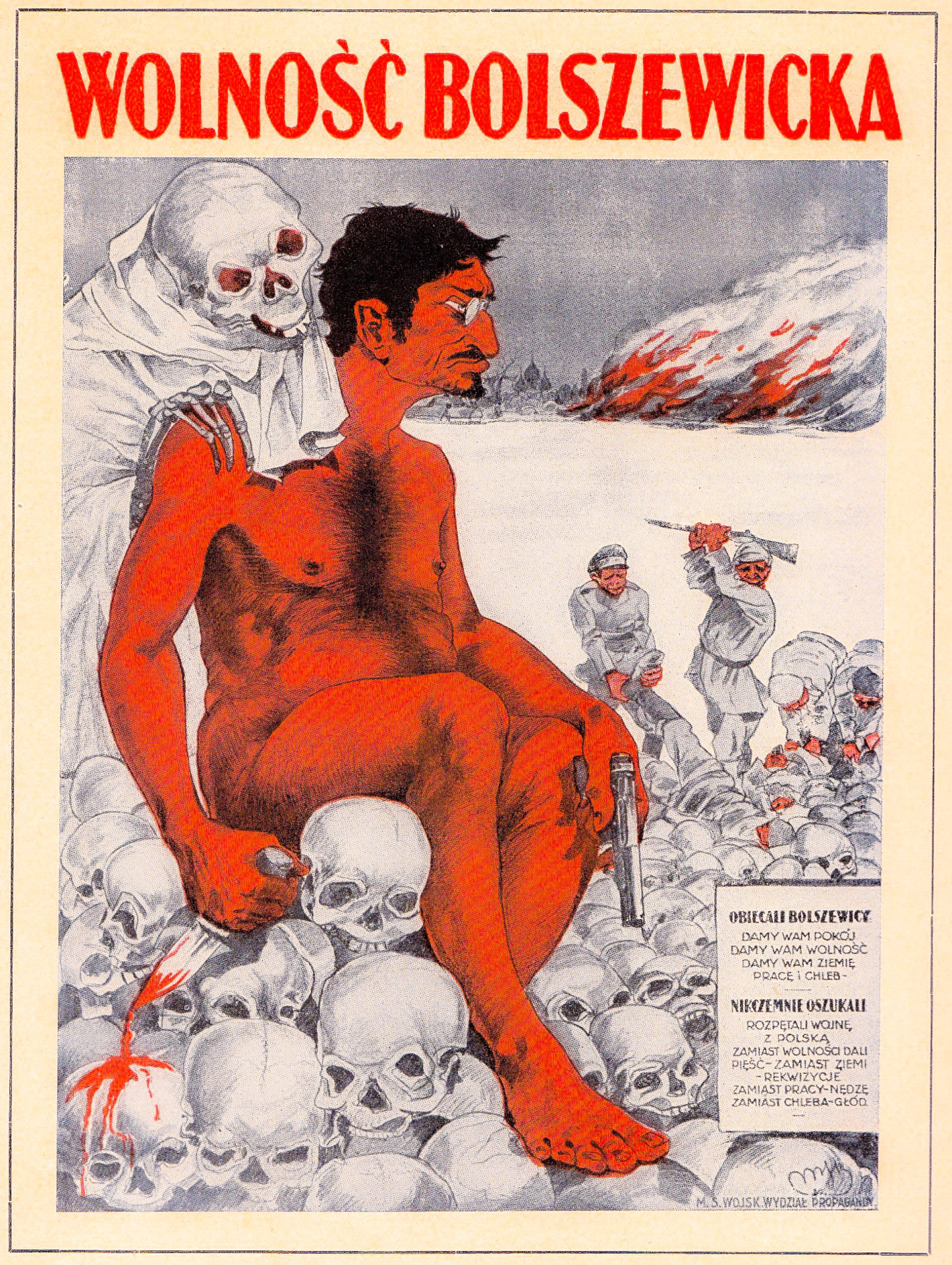
In 1917, the Russian masses took power under the leadership of Lenin and Trotsky’s Bolshevik Party. The Bolsheviks were demonised. The ruling class launched a campaign of lies and slander to morally condemn them. Communists have been hunted down all over the world, and often massacred for the preservation of ‘order’, ‘civilisation’ and, of course, ‘morality’. Subsequently, the horrors of Stalinism provided a golden opportunity for the capitalists to attack the entire edifice of communism, and throw even more mud.
In 1938, Trotsky wrote Their Morals and Ours, in the context of the last Moscow trials. Thousands of old Bolsheviks and others were the subject of false accusations by the Stalinist regime. Many were sentenced to death because they were accused of being ‘Trotskyists’ and ‘fascist agents’.
Why did Trotsky write about morality at that time?
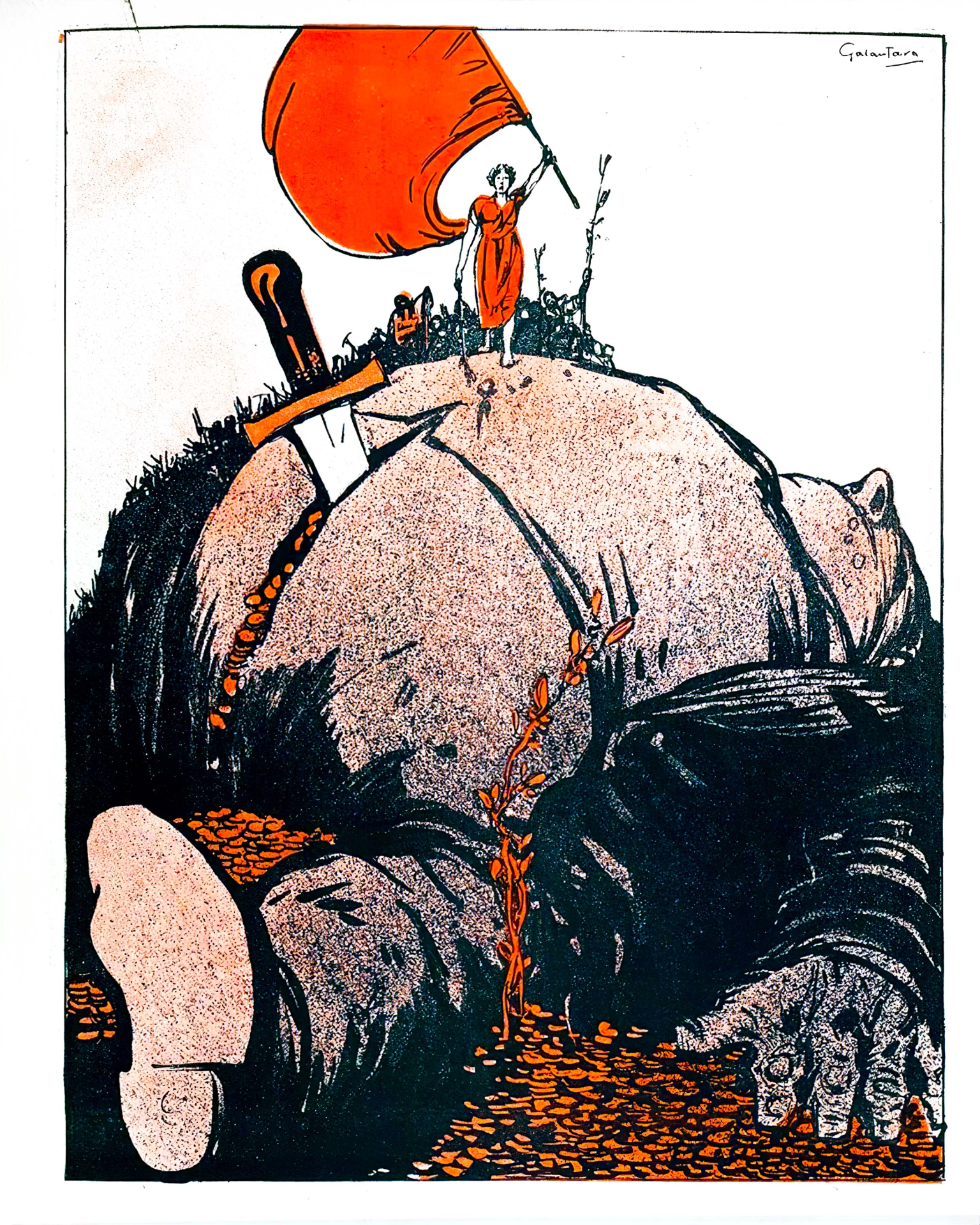
Because cowardly petty-bourgeois intellectuals, from reformists to anarchists, suddenly invoked great abstract principles of morality to condemn communism en bloc, which they discovered had become ‘immoral’.
The petty bourgeoisie, caught between the two great antagonistic classes, is not capable of moral and political independence. Hence it often ends up acting as a transmission belt for the dominant ideology of the capitalists, into the labour movement.
We only need to look at how many prominent ‘lefts’, recoiling in fright at the prospect of being called ‘antisemitic’ by the establishment for opposing Israel, have not only abandoned the Palestinian people, but have joined in the witch hunt against manufactured ‘Left antisemitism’.
In recent years, the ruling class has benefited from the adoption of a mentality of moral purity by much of the Left. There has been an obsession with crafting ‘safe spaces’ and the notion that any organisation of the Left that can be shown to have witnessed immoral behaviour is worthy only of cancellation and liquidation. More time is often spent policing morality than fighting for a new social order. The Left must reject this moralistic dead-end on pain of extinction!
It is absolutely crucial, therefore, that communists remain steadfast in the face of alien-class ideas. As Trotsky observed:
“A revolutionary Marxist cannot begin to approach his historical mission without having broken morally from bourgeois public opinion and its agencies in the proletariat.”[15]
Everywhere around us, there is constant pressure to submit to the dominant morality and ‘public opinion’. Everywhere, we are told that we should not be so ‘extreme’; we should not try to recruit people to the revolutionary party; we should not ask for money to fund the movement. In short, we should not dare to organise professionally to overthrow the system.
After all, we supposedly live in a ‘civilised’ society, in which there are standards of good behaviour. The reformists have completely surrendered to this moral fantasy, in which they believe more than the bourgeois themselves!
Thanks to their opportunism, they respect the rules of the capitalist system and accept not only the bourgeois state, but also bourgeois morality. And by shamefully binding the workers’ movement to these hypocritical standards, they have disarmed it and led it to defeat on countless occasions.
It is natural that the reformists would want to silence anyone who refuses to abide by their rules. This will always be the case. But we have a duty to uphold our revolutionary principles. We have a duty to defend the interests of the working class, and to completely ignore the opinion of the ruling class and the petty-bourgeois ‘Left’.
It is very difficult to resist these pressures alone. Our strength comes from our organisation, from the collective struggle and experience of thousands of Marxists around the world. And there has never been a greater need for such an organisation.
Amidst all the horror and lies produced by capitalism in decline, there is a growing movement for a new form of society, one free from exploitation, inequality, and the hypocrisy that comes with these. In the powerful words of Trotsky:
“… to participate in this movement with open eyes and with an intense will – only this can give the highest moral satisfaction to a thinking being!”[16]
It is to this movement that the communists pledge their lives.
References
[1] J Shapiro, Quoted in ‘He is no hero’: Pennsylvania governor rips people praising UnitedHealthcare CEO’s suspected killer, Independent, 10 December 2024
[2] Emerson College Polling, ‘December 2024 National Poll: Young Voters Diverge from Majority on Crypto, TikTok, and CEO Assassination’, 17 December 2024
[3] L Trotsky, Their Morals and Ours, Pathfinder, 2013, pg 26
[4] K Marx, F Engels, The German Ideology, Progress Publishers, 1976, pg 67
[5] T Grant, ‘Marxism versus New Fabianism – Part Two’, The Unbroken Thread, Fortress, 1989, pg 535
[6] L Trotsky, Stalin, Wellred Books, 2016, pg 682
[7] Quoted in R Bienvenu (ed.), The Ninth of Thermidor, Oxford University Press, 1968, pg 38
[8] I Kant, Groundwork of the Metaphysics of Morals, Hackett, 1993, pg 30
[9] L Trotsky, Their Morals and Ours, Pathfinder, 2013, pg 54
[10] K Marx, Capital, Vol. 1, Progress Publishers, 1971, pg 571
[11] L Trotsky, Stalin, Wellred Books, 2016, pg 3-4
[12] A Lincoln, ‘Speech at Clinton, Illinois, September 8, 1858’, Complete Works of Abraham Lincoln, Vol. 3, Lincoln Memorial University, 1906, pg 349
[13] L Trotsky, Their Morals and Ours, Pathfinder, 2013, pg 54
[14] ibid., pg 55
[15] ibid., pg 40
[16] ibid., pg 58

